
Gadgets and Tech
6 min read
How to Choose the Right 3D Printer for Your Home or Workshop
September 10 , 2026
By Daryl Fillion
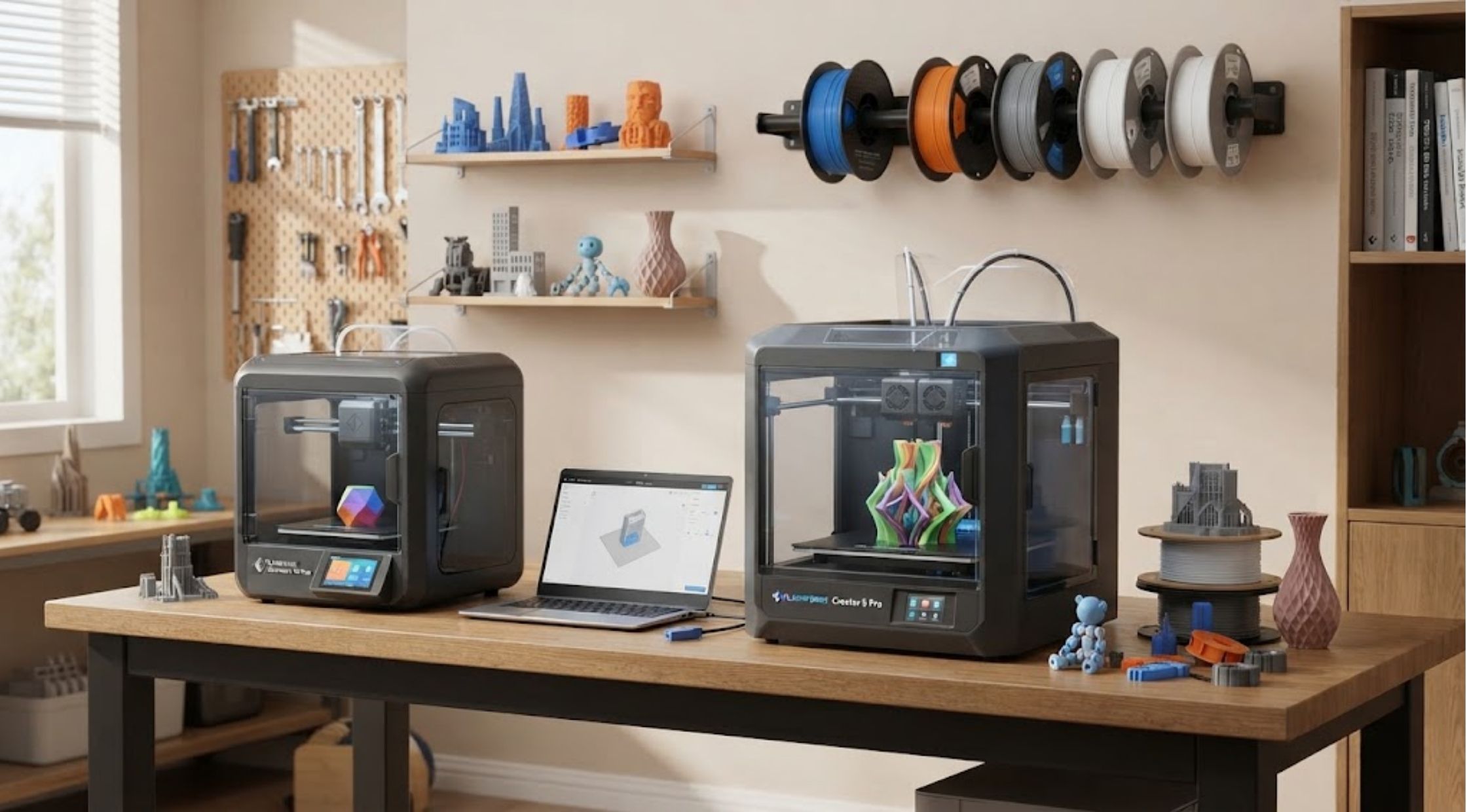
Buying a 3D printer can feel overwhelming.
Buying a 3D printer can feel overwhelming. You start comparing print speeds, build volumes, materials, toolheads, enclosures, software, and dozens of technical specifications, and suddenly, choosing the right machine feels harder than actually using one.
The good news? You don't need the most expensive 3D printer available. You need one that matches what you actually want to make.
Whether you're creating prototypes, replacement parts, models, decorations, school projects, or functional components, choosing the right 3D printer starts with understanding your needs. The right combination of features can make printing easier, more reliable, and much more enjoyable.
Why Do So Many 3D Printer Buyers Struggle?
One of the biggest mistakes beginners make is shopping based entirely on specifications.
A printer advertised as extremely fast may not be the best choice if you prioritize ease of use. A large build volume may sound attractive, but it isn't particularly useful if you only print small objects.
Then there is the question of materials.
Some projects work perfectly with straightforward materials such as PLA, while functional or outdoor parts may require more specialized options. Flashforge currently offers materials including HS PLA, PLA, HS PETG, ABS, ASA, and reinforced engineering filaments.
The better approach is to start with your projects and work backward.
Common Problems New 3D Printer Buyers Face
A Printer That Is Too Complicated
A machine with endless settings can be frustrating when you're simply trying to produce your first successful print.
Beginners often benefit from straightforward controls, dependable software, automatic features, and a setup process that doesn't require hours of technical research.
An effective home 3D printer should make it relatively easy to move from an idea to a finished object.
Poor Print Quality
A low-quality printer can turn a simple project into a troubleshooting exercise.
Uneven layers, poor adhesion, stringing, failed prints, and inconsistent extrusion can waste both material and time.
While technique and settings matter, the hardware you start with also plays an important role.
Running Out of Options
Another common mistake is choosing a printer based only on today's needs.
Perhaps you currently want to print simple models, but eventually you'd like to create larger objects, use different materials, or experiment with multi-color printing.
Choosing a machine with room to grow can prevent you from needing another upgrade too soon.
What Should You Look for in a 3D Printer?
1. Think About What You Want to Print
Before looking at individual models, make a list of the objects you expect to create.
For small decorative models, a compact printer may be enough.
For larger prototypes or functional components, you'll want to pay closer attention to build volume.
If you want to experiment with multiple colors or materials, look for a machine designed around that capability.
Flashforge's current lineup includes the Adventurer series as well as the Creator 5 and Creator 5 Pro, with the latter positioned as enclosed four-toolhead machines.
2. Don't Ignore Ease of Use
A technically impressive 3D printing machine isn't very useful if you avoid using it because setup is frustrating.
Look for features that simplify everyday printing, such as intuitive controls, dependable slicing software, automatic calibration or leveling features where available, and straightforward maintenance.
Flashforge also provides its own software ecosystem, including Flash Studio, Orca-Flashforge, and printer management tools, alongside documentation and support resources.
That ecosystem can be especially useful for buyers who don't want to piece together multiple unrelated tools.
3. Consider the Materials
Your choice of filament should be based on what you need the finished object to do.
PLA is a popular starting point for general projects and models.
PETG can be useful when you need different performance characteristics.
ABS and ASA may be more appropriate for certain functional applications.
For more demanding projects, reinforced materials such as carbon-fiber-filled filaments may be worth considering.
Flashforge currently separates its materials into easy-to-print and engineering categories, making it easier to explore options based on your project requirements.
When Is It Worth Investing in a Better Printer?
If you're only curious about 3D printing and expect to print occasionally, a basic machine may be enough.
But if you know you'll use your printer regularly, upgrading to a more capable model can save frustration in the long run.
A better home 3D printer can give you more flexibility as your projects become more ambitious.
For example, Flashforge's current Creator 5 Pro is positioned as a flagship enclosed four-toolhead printer, while the Creator 5 is presented as a four-toolhead model and the AD5X as an entry-level multi-color option.
That range means buyers can choose according to their experience level and intended applications instead of automatically purchasing the most advanced machine.
Don't Forget About Accessories
The printer itself is only one part of the setup.
Build plates, nozzles, filament, and other replacement components can become important as you print more frequently.
Flashforge currently offers accessories including nozzle assemblies, PEI-coated build plates, filament cutters, extruder assemblies, and enclosure kits for selected models.
Having compatible replacement parts readily available can make maintaining your printer considerably easier.
The Benefits of Choosing the Right 3D Printer
More Reliable Projects
A suitable printer can reduce unnecessary trial and error, particularly when you're using materials and settings appropriate for the machine.
Easier Learning
A user-friendly system lets beginners concentrate on learning 3D design and printing rather than constantly troubleshooting hardware.
More Creative Freedom
As your skills develop, having access to different materials, larger print capabilities, or multi-color functionality can open up new possibilities.
Better Long-Term Value
Instead of replacing a basic machine when your needs change, choosing a capable printer from the beginning can give you room to develop your skills.
A More Enjoyable Experience
Ultimately, 3D printing should be about creating things not spending every evening trying to figure out why the last print failed.
Make Your Purchase Based on Your Projects
There isn't one perfect 3D printer for everyone.
A beginner making small models may need something different from a designer creating prototypes or a hobbyist producing functional parts. Your available workspace, preferred materials, desired print size, experience level, and budget should all influence your decision.
That's why a brand such as Flashforge can be worth exploring when you're comparing options. Its current range covers entry-level machines, multi-color models, enclosed printers, four-toolhead systems, filaments, and accessories.
Start by identifying what you want to create, then choose the features that directly support those projects. Don't pay extra simply for specifications you may never use.
The right 3D printing machine should make your ideas easier to turn into physical objects and ideally, give you enough flexibility to discover what you want to create next.
live smarter
Shop smarter, live better, and stay ahead of the trends with our reliable recommendations!
Home and Garden
7 min read
How to Choose the Right Hardtop Gazebo, Outdoor Pergola, and Patio Furniture
Gadgets and Tech
6 min read
How to Choose the Right Easel for Painting, Drawing Table, and Oil Painting Supplies
Fitness and Sports
5 min read
How to Choose the Best Home Gym Equipment for Small Spaces Without Sacrificing Your Strength Goals
Health and Beauty
5 min read
How to Choose the Right Medical Lift Equipment Without Risking Safety or Comfort?

trending
Fashion
7 min read
How to Choose Comfortable Women’s Dresses That Still Look Stylish
Health and Beauty
6 min read
How to Choose the Right Partial Dentures for Missing Teeth
Gadgets and Tech
6 min read
How to Choose the Right Laser Engraving Machine for Your Projects or Business
Home and Garden
6 min read
How to Choose the Right Countertop Water Filter for Cleaner Drinking Water
Fitness and Sports
6 min read
How to Choose the Right Electric Bike for Your Lifestyle
Travel
6 min read
Make Your Overlanding Adventure More Enjoyable by Adding These Tested Accessories
N/A
7 min read